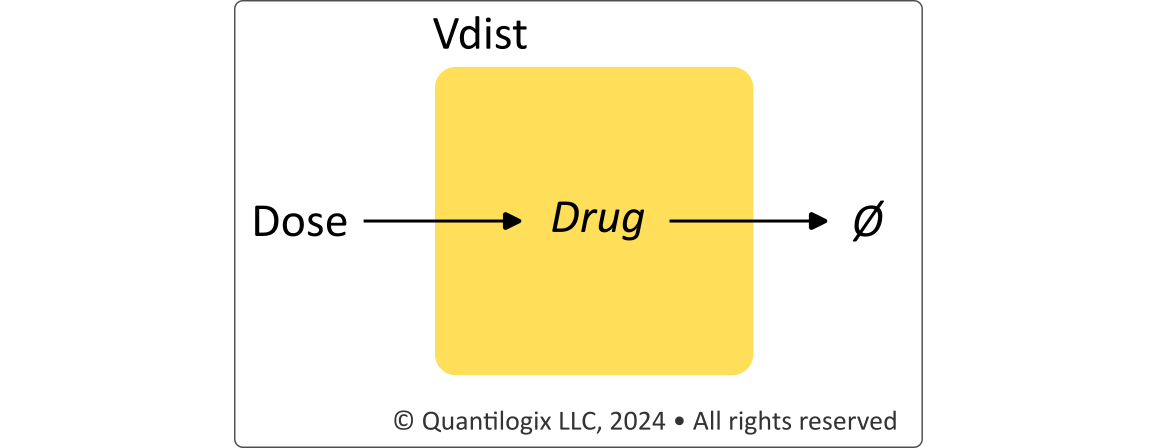
One compartment PK model with IV dosing. The initial dose is assumed to distribute into a single volume of distribution.
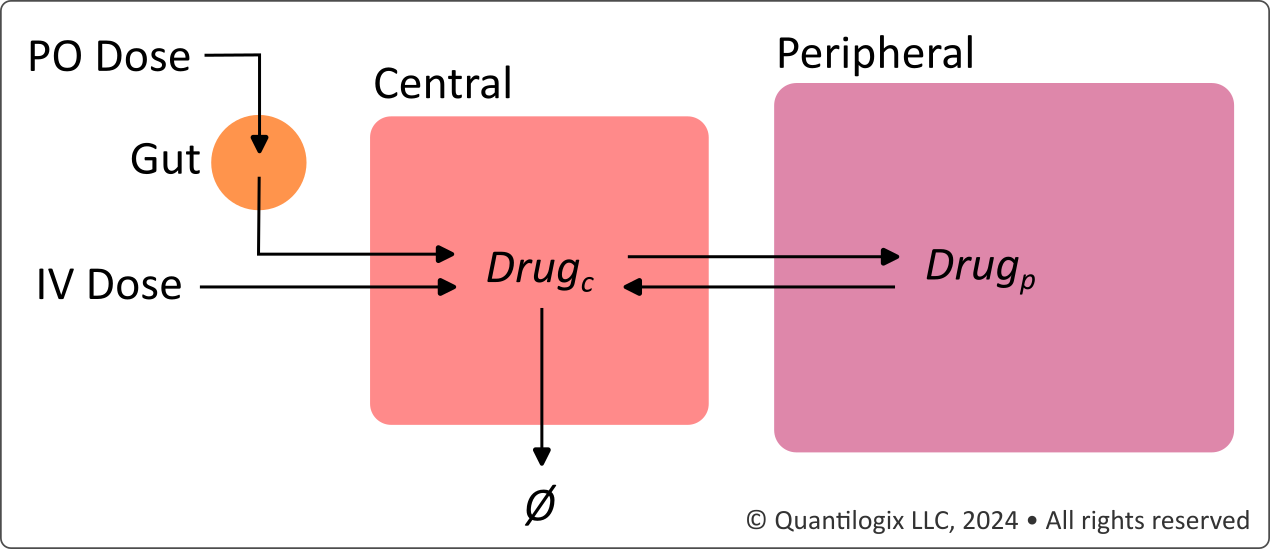
Two compartment PK model with IV and oral (PO) dosing. The central compartment represents circulating blood and well perfused organs, and the peripheral compartment represents other tissues in the body.
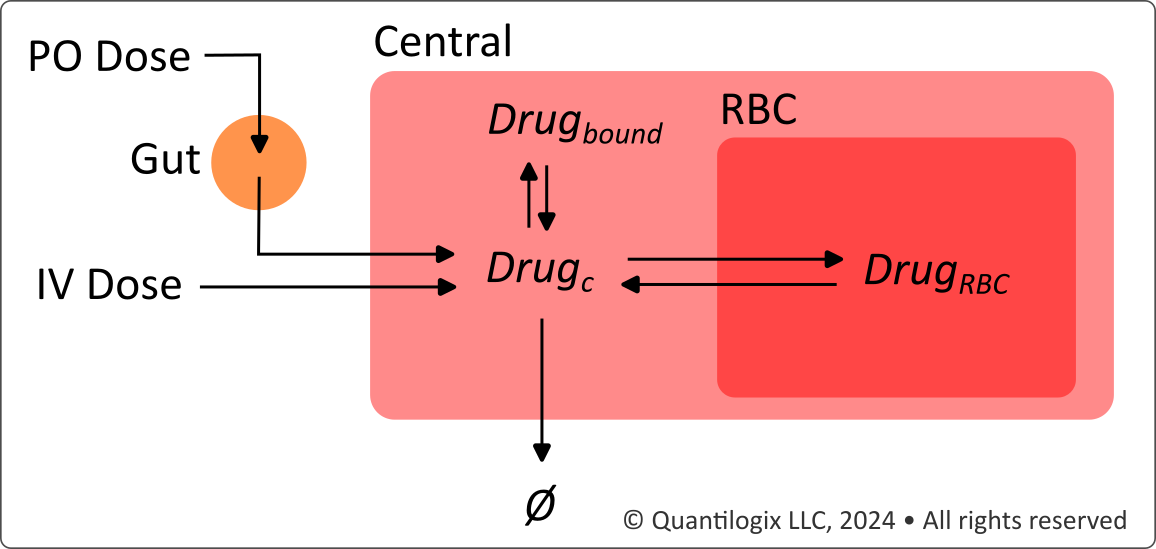
A more detailed model of the central compartment may include plasma protein binding and RBC uptake to quantify the impact of these variables on available free drug levels
- Noncompartmental and compartmental analysis (NCA/CA) of PK profiles
- Small molecule PK modeling with protein binding and RBC uptake
- Antibody and peptide PK modeling with target binding and TMDD
- Covariate analysis to identify predictors of exposure
Pharmacokinetic modeling
The PK profile of a drug reports how its concentration changes over time. PK studies are used to understand the biodistribution of a drug and exposure at the site of action, measure its clearance rate and estimate the time for onset to steady state with repeat dosing. PK profiles of small molecules and antibodies vary over different time scales, and the shape of a PK profile is different for intravenous (IV) versus extravascular (oral or subcutaneous, SC) administration.
Modeling small molecule PK
Small molecule drugs are frequently given orally, and may need to be metabolized into their active form in the liver. In circulation, small molecules bind to plasma protein and may be taken up by red blood cells. A sophisticated PK model accounts for these effects can more accurately predict the dose needed to achieve a target concentration of free drug at the site of action.
Modeling peptide/antibody PK
In contrast to typical small molecules, biologics such as antibodies, bispecifics etc. are typically given IV or SC. The distribution of these molecules into the tissues is slower due to their larger size. Target turnover can further reduce levels of active drug by target-mediated drug disposition (TMDD). Therefore it is important to consider target expression level and turnover kinetics in a model to account for the impact of these dynamic biological effects.
How we can help
Quantilogix provides ongoing support for PK studies in the following areas:
Our goal is to accelerate your ongoing drug development programs - especially if you are a startup or small biotech with limited in house modeling and pharmacometrics support.