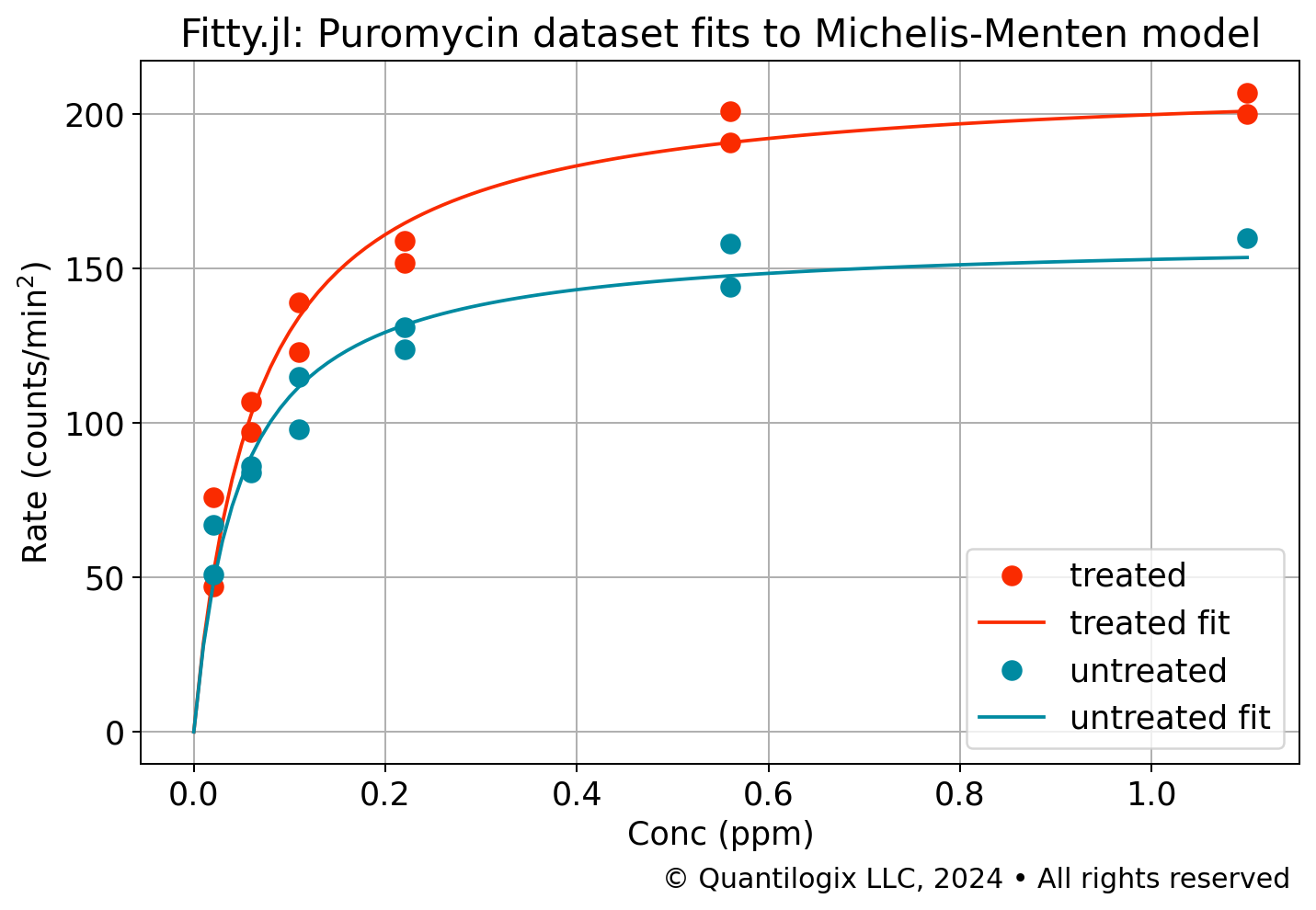
Reaction rates measured at different substrate concentrations for an enzyme either treated with Puromycin or not. Observed rates were fit to a Michelis-Menten model that is parameterized by a maximal rate Vmax and a half-maximal concentration Km. How does the Puromycin treatment affect each model parameter?
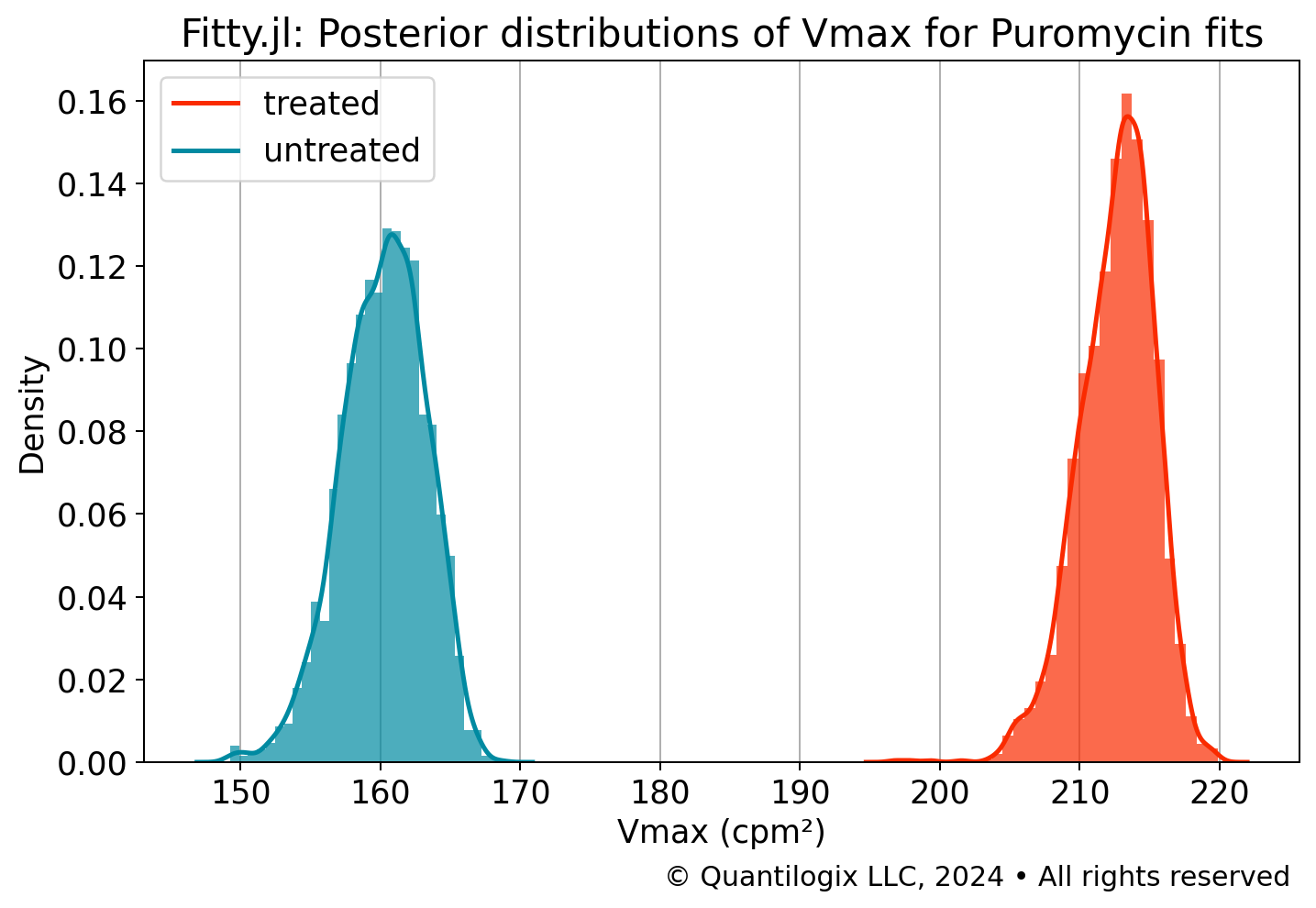
The posterior distributions of Vmax show a clear separation between the treatments.
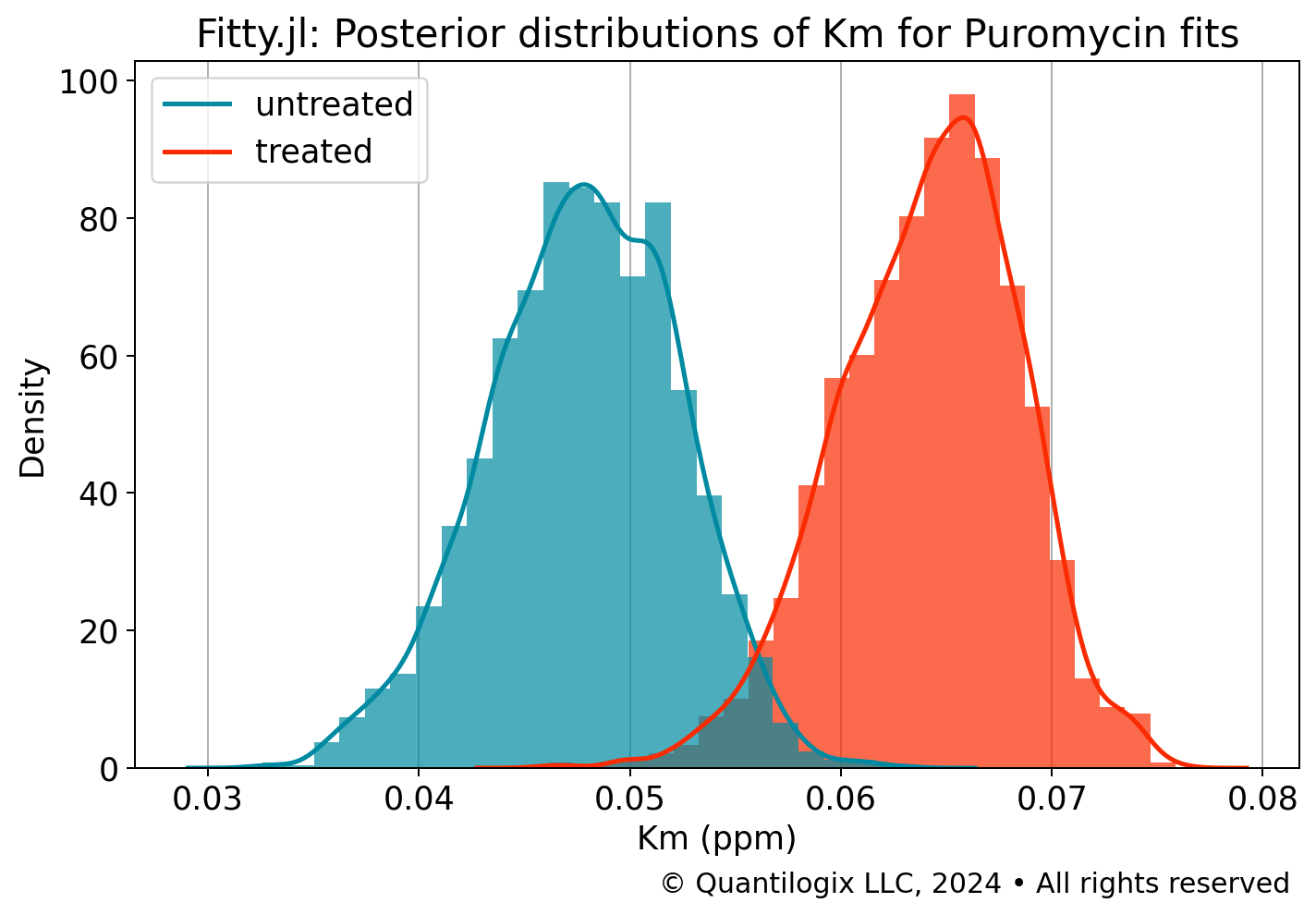
Whereas the posterior distributions of Km overlap between the two treatments
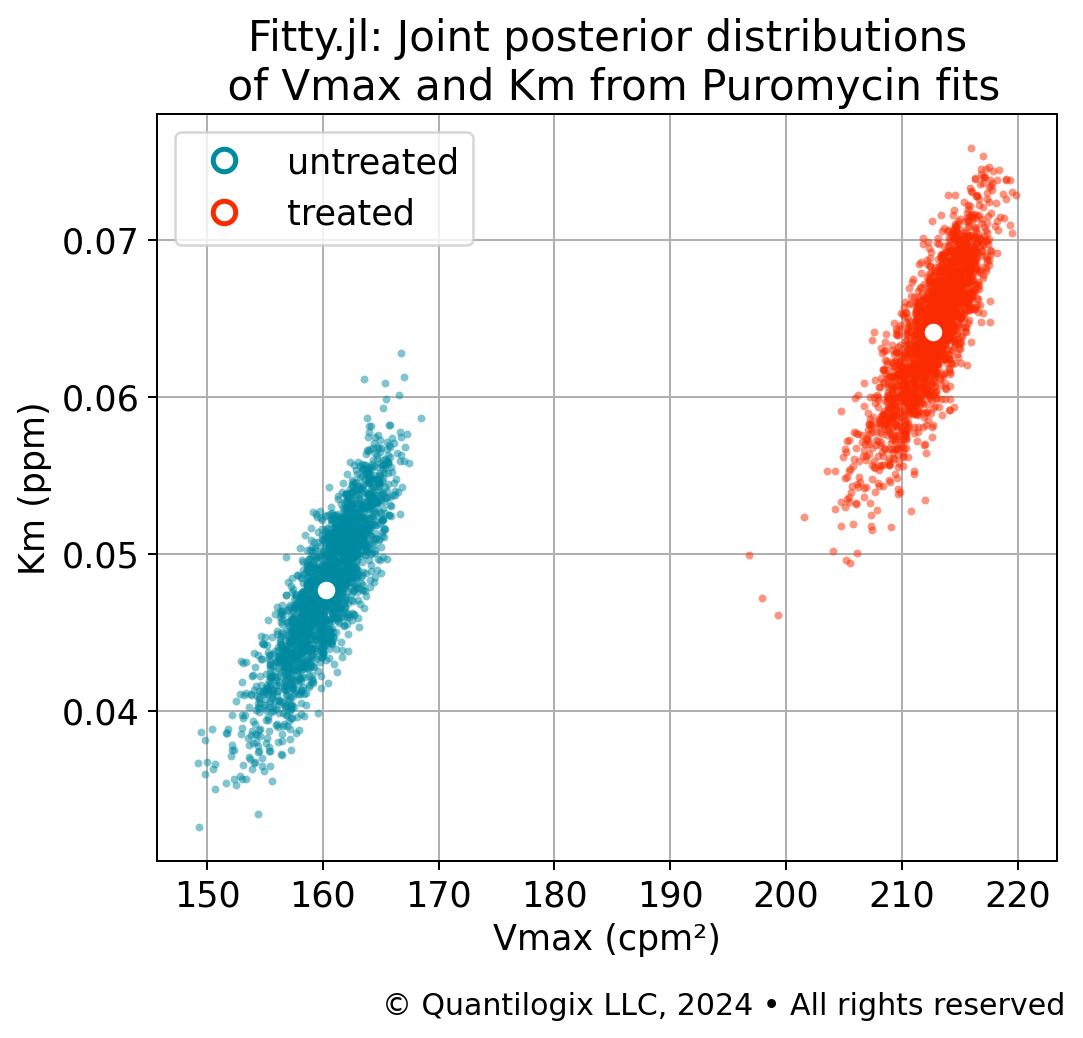
Taken together, the joint posterior distribution supports a significant effect of the treatment on Vmax but not on Km. This analysis was performed using Julia and the Fitty.jl package developed by Quantilogix
- Design and implement data-fitting pipelines in Julia, Python or R
- Simulate predictions for different candidate molecules and effect sizes
- Propose optimal study designs with appropriate power
Statistical modeling and data science
Statistical modeling and data analysis are key components of a drug development pipeline at various stages from early preclinical to clinical. A quantitative modeling approach can provide objective metrics to evaluate candidate molecules with the most optimal properties for the desired pharmacological effect.
Data fitting and parameter estimation
Fitting experimental data to a model can quantify effect sizes to help differentiate between candidate molecules in development. Such models can range from simple Michelis-Menten enzyme rate laws, dose-response models such as a Hill function, to systems models with multiple states, rate laws and feedbacks. Experimental data to train a model may be a single readout (univariate) measured at different time points, or for different doses, or consist of multivariate biomarkers. A robust data-fitting pipeline can be used to compare and systematically rank candidate molecules and generate predictive simulations.
Study design and power analysis
The ability to detect a pharmacological effect reliably in a study is limited by the sample size and variability in the data. It is therefore important design a study with sufficient statistical power to detect a desired effect size. It is also important to consider the expected range of effect sizes in different animal models to anticipate the cost of setting up a study. Statistical simulations can compare proposed study designs and sample sizes, accounting for the model system, baseline biomarker levels, experimental variability, and plausible effect sizes.
Model selection
Models of varying complexity can be used to describe the same biological process at different levels of detail. However, only a subset of model parameters can be typically estimated from available data. Understanding the trade offs between model complexity and limitations of available training data can identify a parsimonious model that minimizes the number of estimated parameters while providing the most predictive power. Alternatively, a multi-model strategy can be used to simulate more robust predictions by weighting models by their goodness-of-fit.
How we can help
Quantilogix provides statistical modeling support in the following areas:
We are here to support your program, especially for small teams with limited in house modeling and statistical support.